
Knee arthritis and joint pain can make everyday tasks—walking, climbing stairs, or exercising—more difficult.
When pain persists despite non-surgical care, knee replacement surgery may be considered. In recent years,
robotic-assisted techniques have become an important tool for orthopaedic surgeons in planning and performing these procedures.
What Is Robotic Knee Replacement?
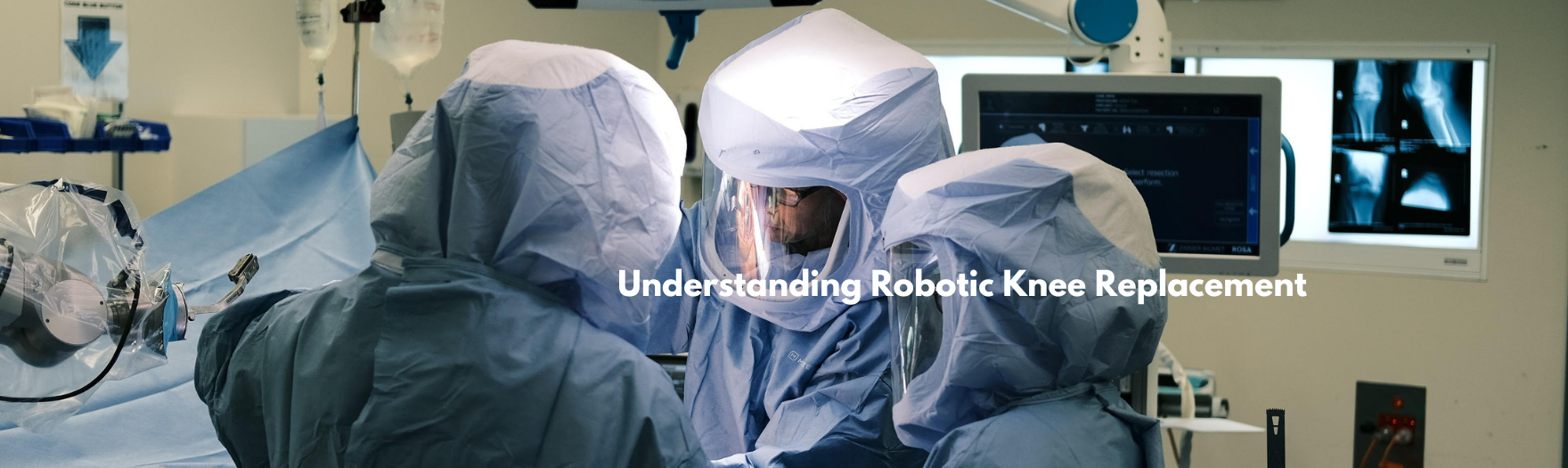
Robotic-assisted knee replacement is a procedure in which the surgeon uses a computer-guided system to help plan and guide surgery.
It does
not mean that a robot performs the operation; the surgeon remains in complete control at all times.
The robotic technology assists by creating a 3-dimensional model of the patient’s knee. This model helps the surgeon plan how much bone to remove and where to position the implant based on the individual’s anatomy.
How It Works
Before surgery, imaging is used to build a digital map of the joint.
During the procedure, the robotic arm or guidance system provides information in real time, helping the surgeon carry out the plan with a high level of accuracy.
This guidance can assist with consistent alignment and balance of the knee replacement components.
Potential Benefits
Research has shown that robotic-assisted knee replacement can offer a number of potential benefits compared with traditional techniques.
These may include:
- Greater accuracy in implant positioning and alignment
- Individualised surgical planning
- Preservation of healthy bone and soft tissue
- Potential for improved joint balance and function
It is important to note that outcomes vary between individuals.
Suitability for robotic-assisted surgery depends on each person’s joint health, anatomy, and overall medical condition.
Who Might Be Suitable
Robotic knee replacement may be appropriate for some patients with significant knee arthritis or damage who have not responded to non-surgical management such as physiotherapy, weight management, or medications.
A thorough assessment is required to determine the most appropriate treatment approach for each person.
Recovery and Rehabilitation
Recovery following robotic knee replacement is similar to other forms of knee replacement.
Patients are usually encouraged to begin gentle movement soon after surgery, supported by a physiotherapist.
Rehabilitation and adherence to recovery instructions play a major role in long-term outcomes.
Discussing Your Options
If knee arthritis is limiting your mobility or quality of life, it may help to learn more about the options available.
You can speak with your GP about a referral to
Dr Ryan du Sart, Orthopaedic Surgeon, who consults from his rooms in
South Bunbury, Western Australia.
During your consultation, Dr du Sart can assess your symptoms, review imaging, and discuss whether robotic-assisted knee replacement—or another treatment—may be appropriate for you.
Disclaimer:
Information in this article is general in nature and is not a substitute for professional medical advice.
Suitability for surgery varies between individuals. Patients should seek a consultation with a qualified medical practitioner before making decisions about treatment.