
Robotic-Assisted Knee Replacement
by Dr Ryan du Sart
For many people with advanced knee arthritis, the word "surgery" arrives long after the word "pain" has become familiar. Stairs get harder. Walking the dog stops feeling like exercise and starts feeling like a negotiation. Eventually, a GP raises the idea of a specialist opinion, and the term "robotic-assisted knee replacement" comes up. It sounds futuristic, and for some patients, a little daunting. Understanding what it actually involves can make that first conversation with a specialist much easier.
What robotic-assisted knee replacement actually means
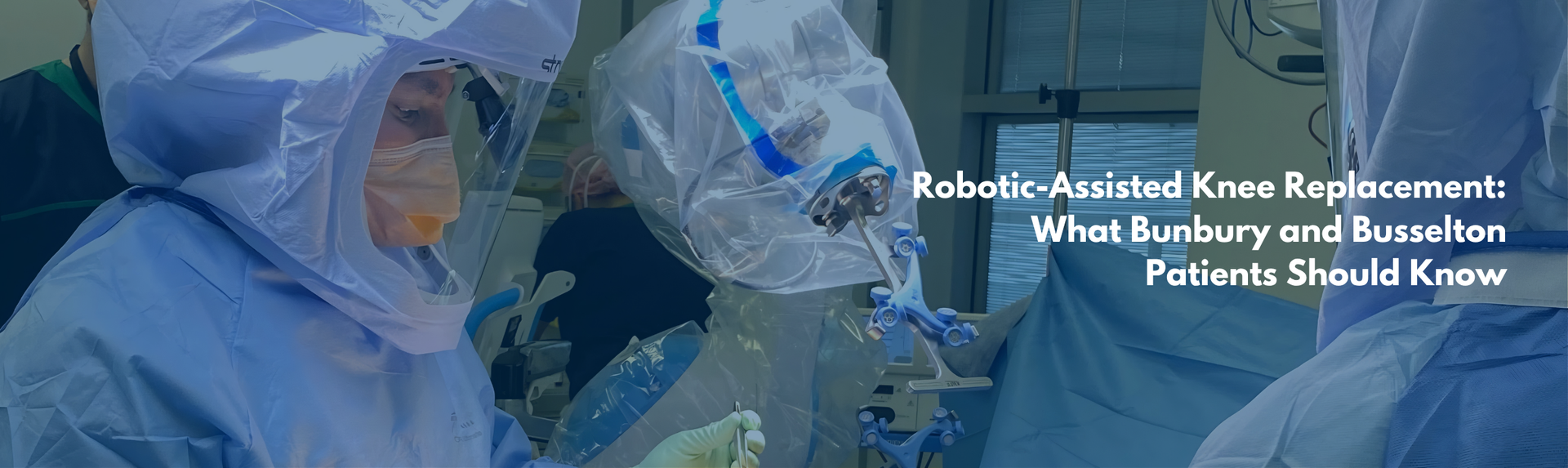
Robotic-assisted knee replacement is not a robot performing surgery independently. The surgeon carries out the operation from start to finish, with the robotic system acting as a highly precise planning and positioning tool. Before surgery, imaging is used to build a 3D model of the patient's knee. This model helps plan implant size, positioning, and alignment specific to that person's anatomy. During surgery, the robotic system provides real-time feedback that supports more accurate bone preparation and implant placement than manual techniques alone.
The procedure still involves removing damaged cartilage and bone from the knee joint and replacing it with a prosthetic implant, in the same way conventional knee replacement does. The difference lies in the planning and precision, not in a fundamentally different operation.
Who it might suit
Not every patient with knee arthritis is a candidate for surgery, robotic-assisted or otherwise. Dr du Sart's approach starts with conservative management: physiotherapy, weight-bearing modification, anti-inflammatory strategies, and activity adjustment. Surgery is considered when these options no longer provide meaningful relief and the joint damage is significant enough on imaging to warrant it.
Robotic-assisted technique may be discussed as an option for patients proceeding to total or partial knee replacement, depending on individual anatomy and the surgeon's assessment. It is one tool among several appropriate techniques, and suitability is determined on a case-by-case basis during consultation.
What to expect around the procedure
Patients typically attend a pre-operative consultation where scans are reviewed and the plan is explained in detail. The operation itself is performed under anaesthetic, generally taking a similar amount of time to conventional knee replacement, with the additional planning phase built into the surgical workflow rather than extending the patient's time in theatre significantly.
Hospital stays and early rehabilitation follow a broadly similar pathway to standard knee replacement, with physiotherapy usually beginning within a day or so of surgery. Recovery time varies between individuals and depends on factors including age, general health, and pre-surgery fitness. Your surgeon can give you a recovery estimate specific to your situation.
Questions worth asking at your appointment
If robotic-assisted knee replacement is raised as an option, useful questions to bring along include: is this technique suitable for my specific knee condition, what does the recovery pathway typically look like, and what are the risks and alternatives available to me. Writing questions down before the appointment often helps patients get the most out of the consultation.
Starting the conversation
Access to a specialist opinion on knee replacement, robotic-assisted or otherwise, begins with a referral from your GP. They can assess your symptoms, arrange any imaging required, and refer you on if a surgical opinion is appropriate. Dr du Sart consults regularly in both Bunbury and Busselton, offering patients across the South West more convenient access to orthopaedic assessment.
Consult Locally in Bunbury or Busselton
Dr Ryan du Sart is an experienced orthopaedic surgeon providing personalised joint care in Bunbury and Busselton, with a strong focus on patient outcomes, education, and modern surgical techniques.
📞
(08) 9779 9767
🌐
www.ryandusart.com.au
📍 Serving patients across the South West of Western Australia