
ACL Injuries: What Happens Next, and When Reconstruction Is Considered
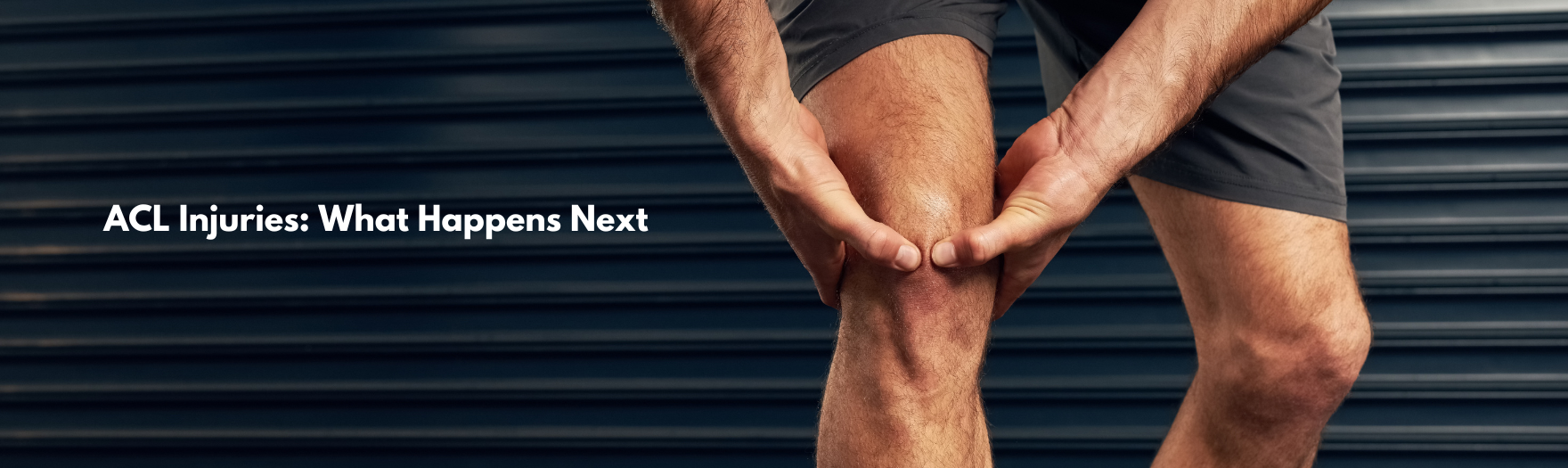
It often happens in a single second. A change of direction on a netball court, an awkward landing at footy training, a ski that keeps turning when the rest of the body does not. There is a pop, then a sensation that something inside the knee has shifted. Within a few hours the knee is swollen and difficult to bend, and walking feels unreliable.
Anterior cruciate ligament injuries are among the most common significant knee injuries seen in Australian sport, and they affect people well beyond elite level. Weekend players, tradespeople, teenagers in school sport and adults returning to exercise after a break all present with them. The good news is that ACL injuries are well understood, and there is a clear pathway from diagnosis to treatment. Understanding that pathway can make an anxious few weeks considerably easier.
What the ACL actually does
The ACL is one of four main ligaments in the knee. It runs diagonally through the centre of the joint and connects the thigh bone to the shin bone. Its job is to stop the shin sliding forward and to control rotation, which is why it matters most during pivoting, cutting and landing rather than during straight-line walking.
This explains something patients often find confusing. It is entirely possible to walk reasonably well on a torn ACL, particularly once the initial swelling settles, and then find the knee gives way the moment there is a twist or a sidestep. A knee that feels acceptable in a straight line is not evidence that the ligament is intact.
How these injuries usually happen
Most ACL injuries are non-contact. The typical mechanism is a sudden deceleration, a pivot on a planted foot, or landing from a jump with the knee rolling inward. A direct blow to the knee can also do it, but it is less common than people assume.
Signs that warrant assessment include an audible pop at the time of injury, rapid swelling within the first few hours, a feeling of the knee giving way, and difficulty putting weight through the leg. A knee that locks or cannot be straightened may indicate an associated meniscal injury, which changes the urgency of assessment.
Diagnosis usually begins with a clinical examination, which is often more informative than patients expect. An MRI is commonly used to confirm the ACL injury and, importantly, to look at the meniscus and cartilage, because ACL tears frequently occur alongside other damage inside the joint.
Not every ACL tear needs surgery
This surprises many patients. The decision to reconstruct an ACL is based on the person, not the scan alone.
Factors that inform the discussion include age, activity demands, occupation, whether the knee is functionally unstable in daily life, and whether there are associated meniscal or cartilage injuries that need addressing. Someone whose knee feels stable during walking, cycling and swimming, and who does not want to return to pivoting sport, may do well with a structured rehabilitation program alone. Someone who plays cutting and pivoting sports, or whose knee gives way during ordinary activity, is more likely to be a candidate for reconstruction.
Where surgery is planned, there is usually value in a period of rehabilitation beforehand. Restoring range of motion, reducing swelling and rebuilding quadriceps strength before an operation tends to make the rehabilitation afterwards more straightforward.
What reconstruction involves
An ACL cannot reliably be stitched back together, so the ligament is reconstructed rather than repaired. A graft is used to create a new ligament, most commonly taken from the patient's own hamstring, quadriceps tendon or patellar tendon. Graft choice is discussed individually and depends on factors including sport, previous surgery and body type.
The procedure is performed arthroscopically through small incisions, with tunnels prepared in the bone so the graft can be positioned along the path of the original ligament and fixed in place. Any meniscal injury is usually addressed during the same operation. Most patients go home the same day or the following day.
Recovery takes time, and that is normal
The operation is the short part of the process. Rehabilitation is where the outcome is largely determined, and it is measured in months rather than weeks.
Early rehabilitation focuses on swelling, straightening the knee and reactivating the quadriceps. Strength work builds progressively from there, with running typically reintroduced in the middle stages and sport-specific cutting, pivoting and landing work later. Return to pivoting sport is generally considered around nine to twelve months, and it depends on strength, control and confidence rather than the date on the calendar.
Patients should contact their surgical team if they develop a fever, increasing wound redness or discharge, calf pain or swelling, or a sudden loss of movement in the knee.
Starting the conversation
If your knee has given way, swollen rapidly after an injury, or feels unreliable when you change direction, the first step is a GP appointment. Your GP can examine the knee, arrange imaging where appropriate, and refer you for specialist assessment if needed. Dr Ryan du Sart consults regularly in Bunbury and Busselton, and urgent cases can be prioritised where appropriate.
For personalised advice about ACL injuries, speak with your orthopaedic specialist.